

Clear answers about your child's reading — and a path forward.
An in-home clinical reading assessment that comes to you — a clear picture of how your child reads, and a plan you can act on.
If your child is struggling with reading, the hardest part is not knowing why. A clinical reading assessment gives you a clear, honest picture of how your child reads — what's working, what's getting in the way, and exactly where to start. We come to you, anywhere in Greater Portland and Central Maine, and you leave with a plan you can act on right away.
The assessment is the whole point — not a step toward something you have to buy. In one visit, you walk away knowing where your child stands and what to do next.

What You Walk Away With
Every visit ends the same way — with you holding a clear, usable picture of your child as a reader. Three things, specifically:
A clear reading profile — what's solid, and exactly where your child is getting stuck.
A plan you can act on — specific next steps matched to your child, not a generic handout.
Something to bring to school — documented findings you can take to your child's teachers to inform the support they receive.
That last piece is the one that changes things — you walk into your child's school with evidence, not just worry.
For Families
A clear assessment is a beginning, not the end. Each month we share free literacy resources for families — practical, evidence-based tools you can use at home, whatever stage your reader is at.
Join our First Families list to get them — and to hear first when assessments open near you.
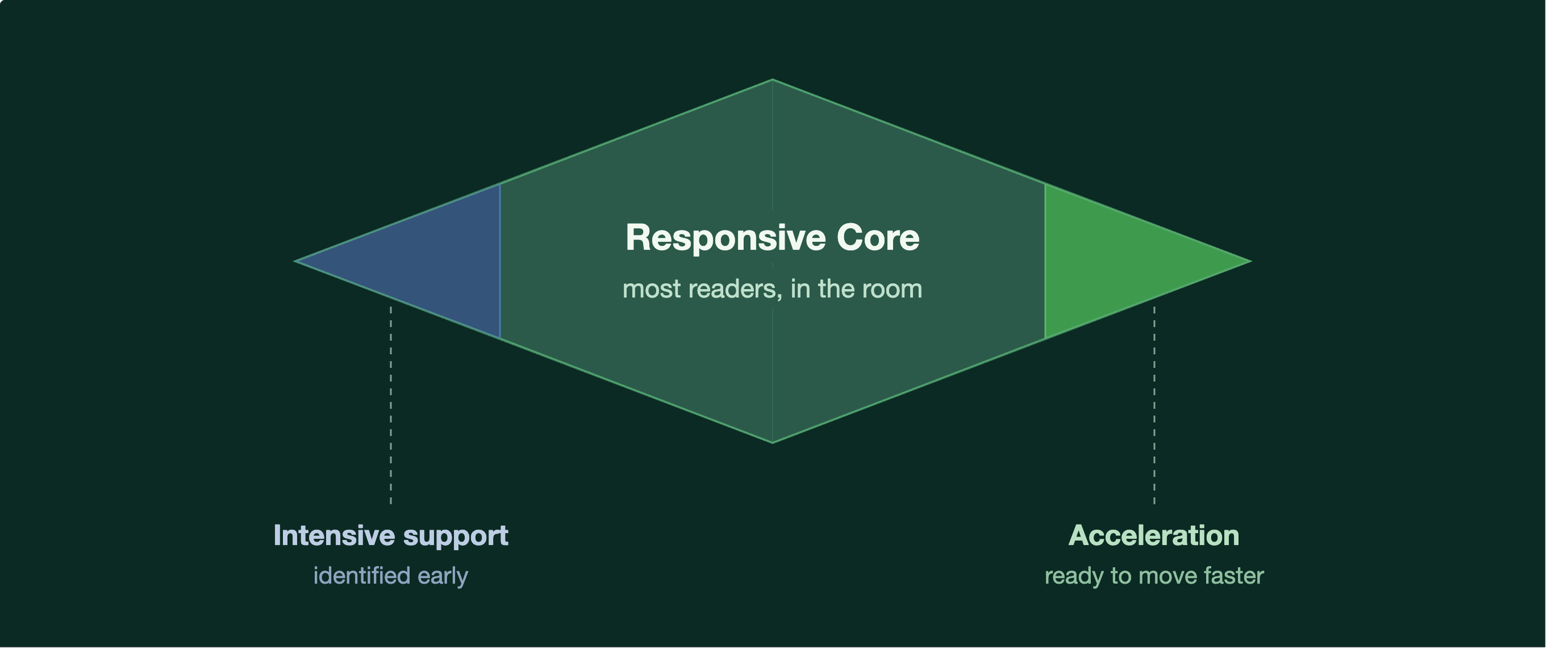
Grounded in the Responsive Diamond Model
The Reading Center's work rests on the Responsive Diamond Model — the model we developed for delivering strong, student-centered, responsive Tier 1.
A responsive core reaches more readers, and it reliably identifies the students who need intensive reading intervention — the exact support we provide. We share the model openly, as best practice, for anyone building a system to reach every reader.

Ready for Clear Answers?
The earlier you look, the less your child has to lose. One visit, and you'll know exactly where to start.